


In short: Craigieburn is not only a growth corridor. The older parts produce a different report entirely - movement that has already happened, and maintenance that has not.
Cracking with a category
We measured cracking at category 2 on a Craigieburn home - one to five millimetres. Categories matter because they turn an alarming-looking crack into a known quantity with a known response. Category 2 is generally repairable without structural work, but it is worth knowing whether it is still moving.
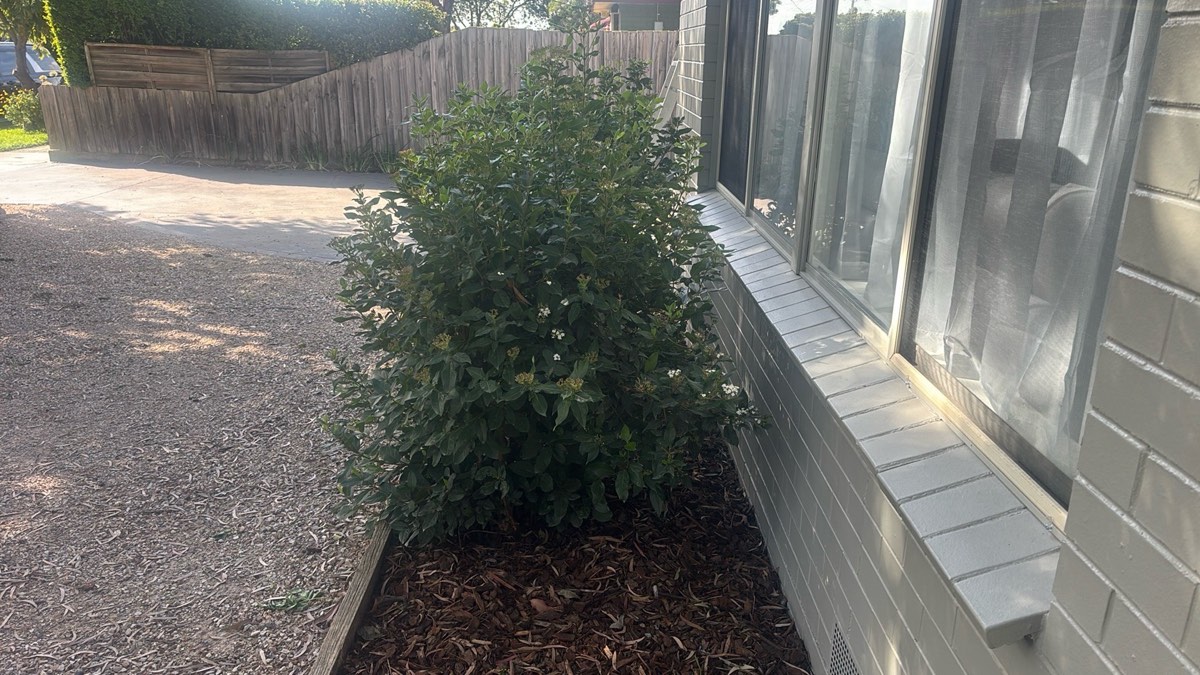
Planting against the foundation
Planting grown hard against the foundation is one of the most common contributors to movement we see, and one of the easiest to fix. Roots and retained moisture at the slab edge change the moisture regime under one part of the house, and reactive soil does the rest.
What maintenance neglect looks like
Timber stairs deteriorated underfoot, and water intrusion showing in the roof space. Neither is a defect in the builder sense - both are a building that has not been maintained, and both are things a buyer inherits at full price unless somebody looks.
Termite protection on older stock
We have also recorded a termite barrier bridged at the perimeter here. On an established home, bridging is usually the result of landscaping, paving or garden beds added after construction, raising ground levels over the barrier.
Written by the Owner Inspections team from inspections carried out in Craigieburn. Licensed building practitioners, Building & Plumbing Commission registration CDB-U 53425.